>

>

US lawsuit against Google: Parallels to the EU ruling 2017?

US lawsuit against Google: Parallels to the EU ruling 2017?

Following the EU ruling of 2017, Google is under pressure once again: In the USA, the company was found guilty of abusing its market power in the advertising and comparison site market. The parallels to the EU case are clear.
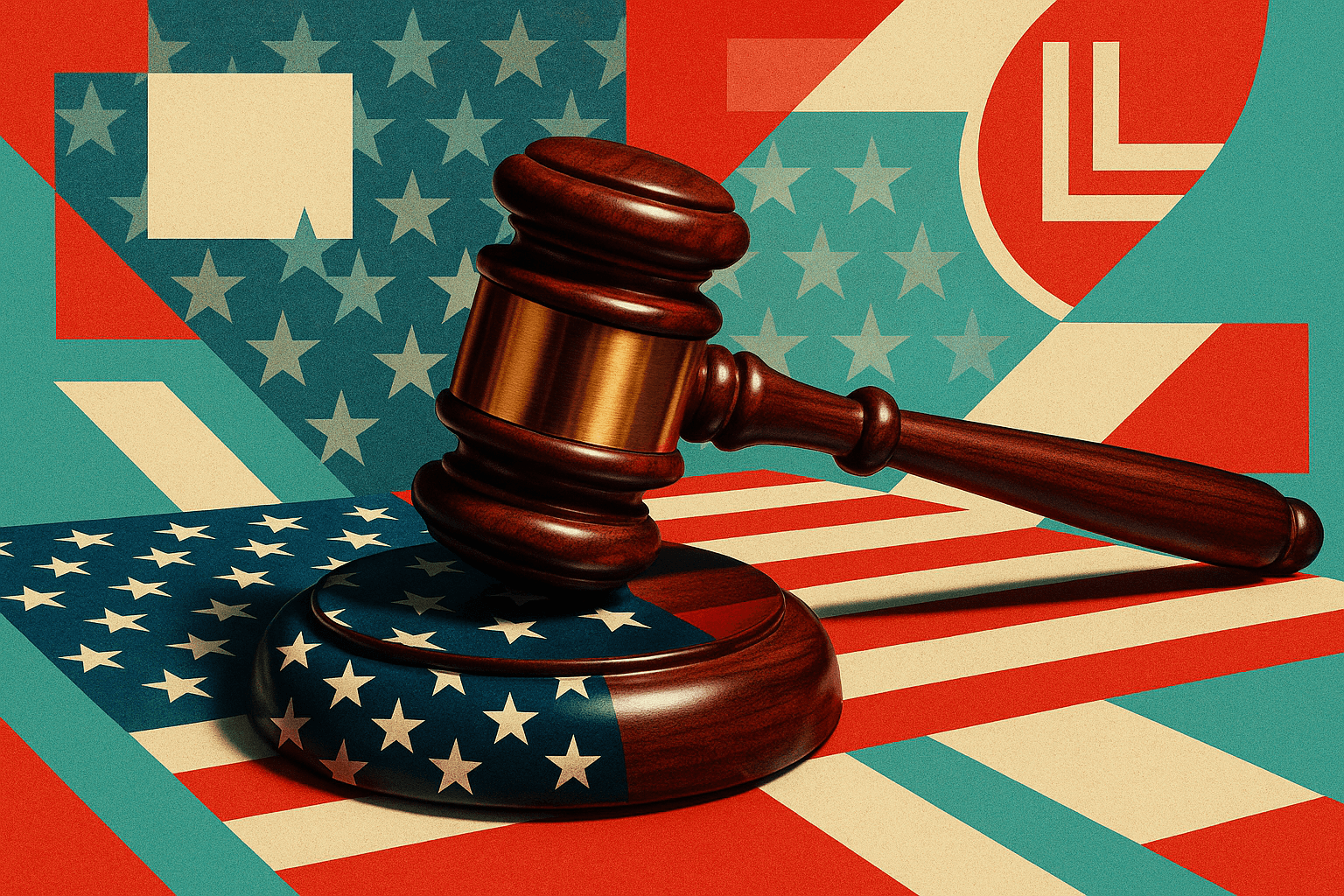
Judge hammer with USA flags in the background

2017 marked a turning point in the history of the digital economy: The European Commission (EC) imposed a record fine of €2.42 billion against Google. The verdict? "Illegal preferential treatment of its own comparison shopping service (Google Shopping)." Now, 7 years later, a similar spectacle is unfolding in the USA. 

The new verdict against Google in the USA

On 20 October 2020, a total of 11 states sued Google. The allegation: The online giant is accused of exploiting its dominant market position to disadvantage competitors in the advertising and comparison portal sectors. The plaintiffs claim that Google favours its own services, thereby significantly restricting competition in the comparison portal market. The US government even argued that Google had created "a wall around its search engine monopoly" with this practice. A 280-page ruling has now been handed down by Judge Amit Mehta, alleging a potential violation of American antitrust law by Google. What demands the US Department of Justice, as the plaintiff, will make remains unknown.

 Déjà-vu from the EU ruling against Google

In 2017, a ruling was also made against Google regarding very similar allegations: 

  • Violation of EU antitrust law. This means:

  • Preferential treatment of its own service (Google Shopping)

  • Disadvantage to competitors (third-party comparison portals)

When the verdict against Google was handed down by the European Commission (EC) in June 2017, not only was a record fine of €2.42 billion imposed, but Google was also required to change its practices within 90 days. Specifically, this means that competing price comparison services are no longer to be disadvantaged. Google's solution was and still is today the Google CSS (Comparison Shopping Service) programme. This allows price comparison services to display ads in Google Shopping results, thereby promoting competition with Google's own shopping service. This is intended to give more providers the opportunity to showcase their products. 

The parallels between both rulings

The similarities between the EU case and the current US case are striking. The central allegations are particularly overlapping:

  • Exploitation of the dominant market position

  • Disadvantage to competitors

  • Impairment of competition

While the EU has already imposed these allegations with high fines and demands for changes in practices and called for measures to remedy the deficiencies, the US case is still in an early stage, where no fines or mandatory changes are required yet. 

Is the Google CSS Partner Programme soon to be worldwide?

The current case in the USA raises doubts: 

Does Google also unfairly exploit its dominant power against competitors in other segments?

Currently, one can only speculate about this. However, the parallels with the EU ruling from 2017 make it clear that such problems are not just a regional phenomenon - they affect the whole world. It remains to be seen what further actions the US authorities will take and whether these will lead to an outcome similar to that of the EU. A Google CSS programme in America? The ruling not only speaks against Google's shopping practices but also against Google's overall power in the search area. With an opening of the shopping channel, Google would not be rid of the US authorities. Nevertheless, similar topics are at stake in both rulings. It remains to be seen whether Google will react similarly to how it did in the EU and open advertisements towards third-party providers. 

What we already know: The decision of the US authorities could fundamentally change the digital economy and the way in which large tech companies are regulated in the future.

About

Label Up is a tech provider from Vienna that helps agencies and shops achieve better results with its own Google Shopping CSS and smart label-based optimization.

Featured Posts

26 Feb 2026

/

3

Min reading time

The British PPC agency "Be Found Be Chosen" has launched its own Google CSS through Label Up. You can find out what advantages their clients have gained from this in the following article.

Take your shopping ads to the next level.

Questions about the Google CSS partnership? Or would you like to learn more about optimisation with smart labels? Regardless, you can discuss with one of our experts. In a short online call, we can show you our solution and discuss your questions. All without sales talk.

Filip

Co-Founder & Partnerships

Take your shopping ads to the next level.

Questions about the Google CSS partnership? Or would you like to learn more about optimisation with smart labels? Regardless, you can discuss with one of our experts. In a short online call, we can show you our solution and discuss your questions. All without sales talk.

Filip

Co-Founder & Partnerships

Take your shopping ads to the next level.

Questions about the Google CSS partnership? Or would you like to learn more about optimisation with smart labels? Regardless, you can discuss with one of our experts. In a short online call, we can show you our solution and discuss your questions. All without sales talk.

Filip

Co-Founder & Partnerships

Read more:

31 Mar 2026

/

3

Min reading time

In 2026, Google Shopping will launch in Luxembourg as part of the Bundle-1 expansion into 15 EMEA markets. For retailers in the Grand Duchy, this is an opportunity to visually position products at the top of search. Learn how to leverage linguistic diversity (DE, FR, EN) and secure a structural advantage of 20% lower CPCs and exclusive branding with your own keyword CSS from Label Up, before the competition occupies the market.

31 Mar 2026

/

3

Min reading time

Google Shopping Ads are coming to Latvia in 2026! As part of the "Bundle 2" rollout, this launch gives merchants the opportunity to be visible with visual ads at the top of search results just in time for the Christmas shopping season. Learn how to overcome technical challenges like language localization and secure a structural advantage of 20% lower CPCs compared to the competition with your own keyword CSS from Label Up.

31 Mar 2026

/

3

Min reading time

E-commerce in Croatia is on the verge of transformation: Google is officially rolling out Shopping Ads in 15 new EMEA markets in 2026. The launch for the Croatian market is scheduled for Q4 2026. This provides businesses with the opportunity to place products as Google Shopping Ads just in time for the Christmas season of 2026. To successfully leverage this launch as a first mover, a strategic shift from traditional text ads to a product data-driven strategy is necessary.

31 Mar 2026

/

3

Min reading time

In November 2026, Google Shopping will launch in Lithuania as part of an expansion into 15 EMEA markets. In e-commerce, this is the opportunity to place products visually at the top of search results. To secure maximum margins, choosing the right CSS infrastructure is crucial. Find out how to leverage the first-mover advantage and outpace the competition with a custom keyword CSS from Label Up, achieving 20% lower CPCs and strong branding right from launch.

30 Mar 2026

/

3

Min reading time

E-commerce in Cyprus is at a turning point: In July 2026, Google Shopping Ads will officially roll out. This time window offers local retailers and agencies the rare opportunity to benefit as "first movers" from low CPCs and high visual presence. Find out here what technical requirements are necessary for the feed launch, how to navigate the 20% CSS margin, and why having your own keyword CSS provides the crucial branding advantage in Nicosia and beyond.

30 Mar 2026

/

3

Min reading time

North Macedonia is facing a digital premiere: In July 2026, Google Shopping officially launches, revolutionising the e-commerce landscape from Skopje to Bitola. While traditional text ads take a back seat, high-performance product cards take the lead in search results. Those who strategically leverage this technological shift in the first rollout bundle will secure a dominant market position before the competition even reacts.

31 Mar 2026

/

3

Min reading time

In 2026, Google Shopping will launch in Luxembourg as part of the Bundle-1 expansion into 15 EMEA markets. For retailers in the Grand Duchy, this is an opportunity to visually position products at the top of search. Learn how to leverage linguistic diversity (DE, FR, EN) and secure a structural advantage of 20% lower CPCs and exclusive branding with your own keyword CSS from Label Up, before the competition occupies the market.

31 Mar 2026

/

3

Min reading time

Google Shopping Ads are coming to Latvia in 2026! As part of the "Bundle 2" rollout, this launch gives merchants the opportunity to be visible with visual ads at the top of search results just in time for the Christmas shopping season. Learn how to overcome technical challenges like language localization and secure a structural advantage of 20% lower CPCs compared to the competition with your own keyword CSS from Label Up.

31 Mar 2026

/

3

Min reading time

E-commerce in Croatia is on the verge of transformation: Google is officially rolling out Shopping Ads in 15 new EMEA markets in 2026. The launch for the Croatian market is scheduled for Q4 2026. This provides businesses with the opportunity to place products as Google Shopping Ads just in time for the Christmas season of 2026. To successfully leverage this launch as a first mover, a strategic shift from traditional text ads to a product data-driven strategy is necessary.

31 Mar 2026

/

3

Min reading time

In November 2026, Google Shopping will launch in Lithuania as part of an expansion into 15 EMEA markets. In e-commerce, this is the opportunity to place products visually at the top of search results. To secure maximum margins, choosing the right CSS infrastructure is crucial. Find out how to leverage the first-mover advantage and outpace the competition with a custom keyword CSS from Label Up, achieving 20% lower CPCs and strong branding right from launch.