OMR 2025 Recap: Between Buzzwords and Beer Coaster Ideas
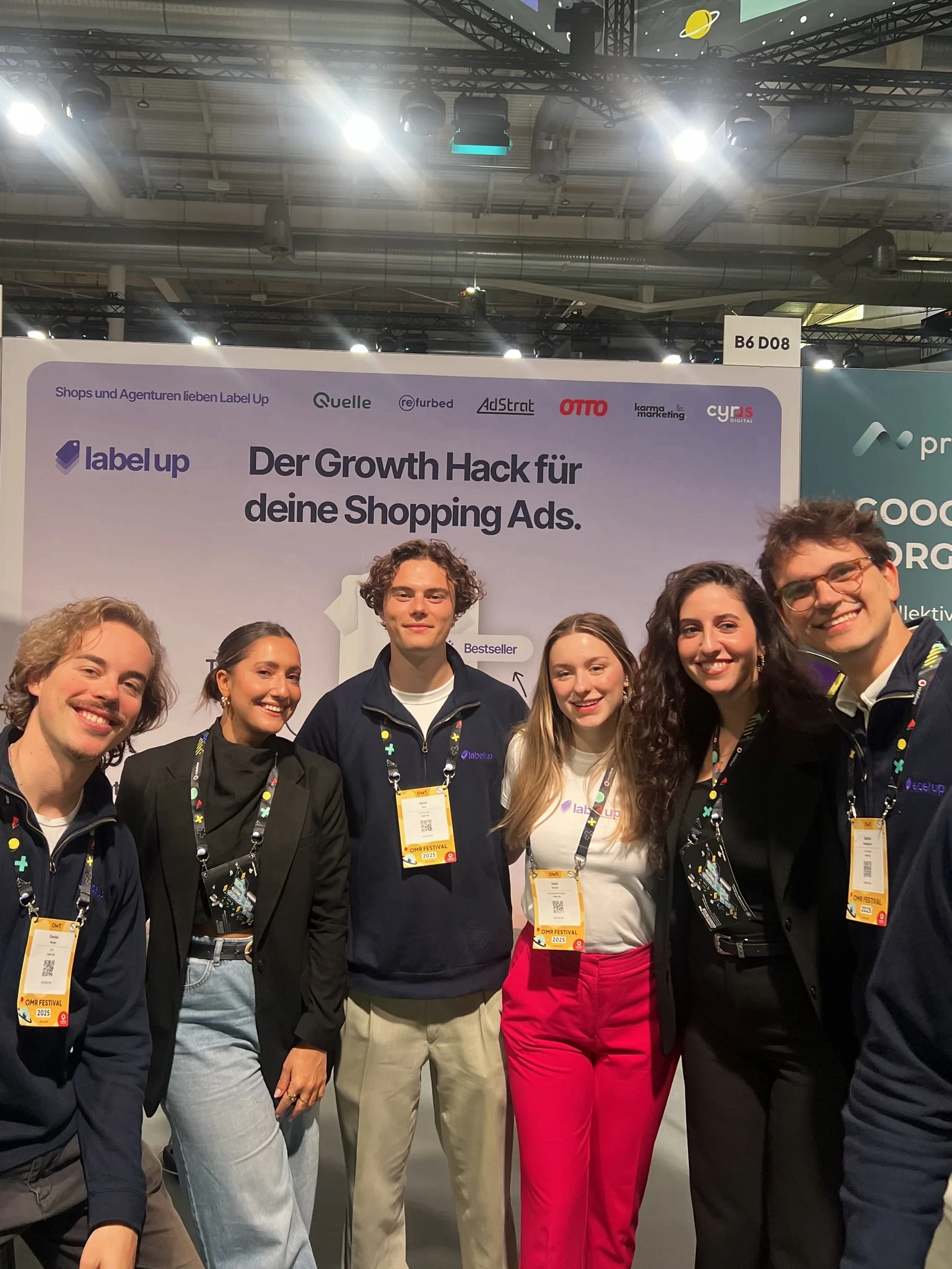
Five days, five learnings: OMR 2025 was not just a trade fair, it was pure team time. We spoke with clients, met old acquaintances, learned new things, and felt how strongly the Label-Up team has grown together.
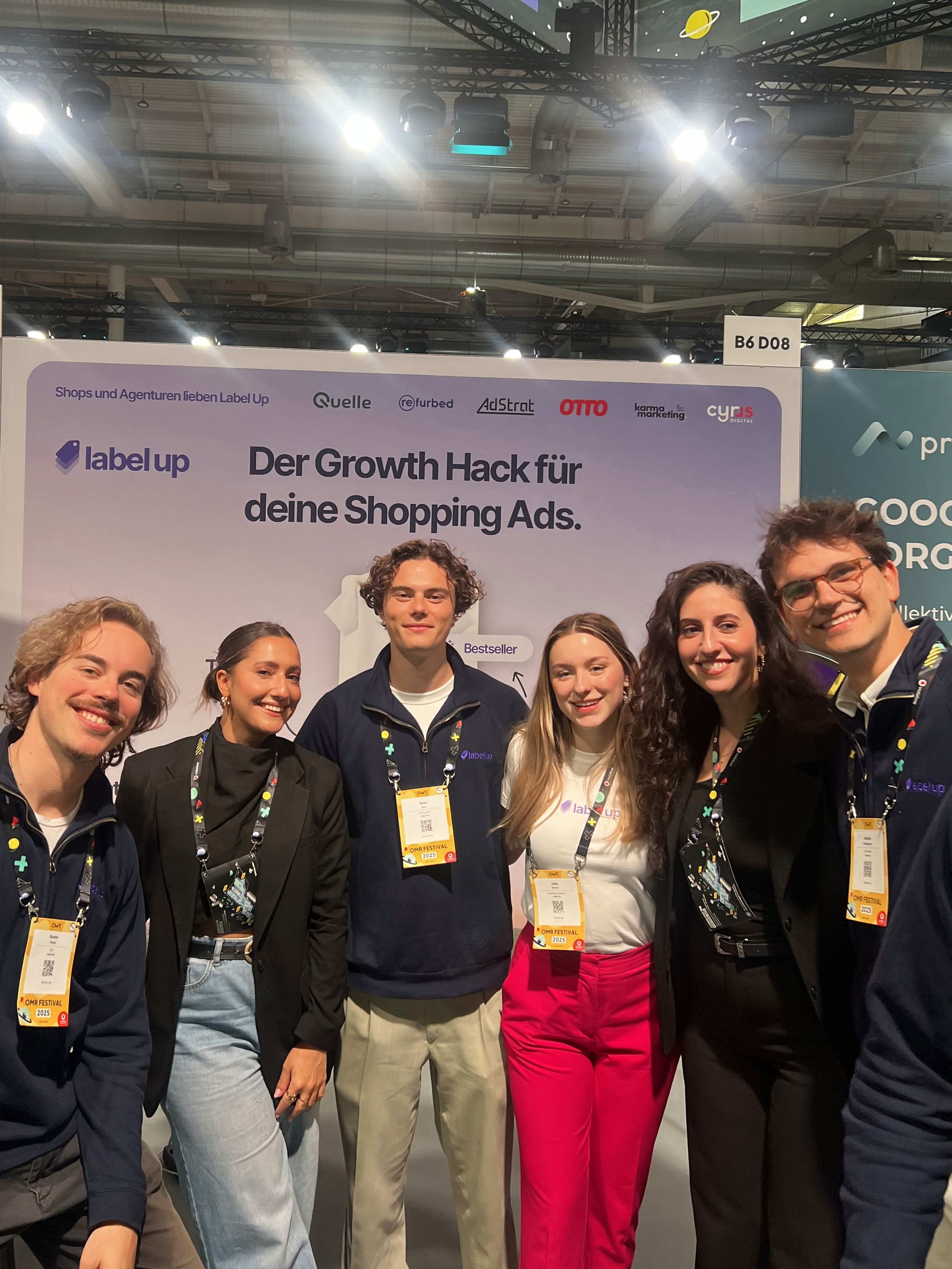
5 days in Hamburg. 5 days of team time, client meetings, and deep dives into the digital future. OMR 2025 was not just a trade fair for us as Label Up - it was a festival for feed nerds, growth junkies, and honest conversations.
Here comes our 5-point recap - with personal highlights, exciting insights, and the question: How do we stay relevant in the age of AI?
1. More personal than expected: Offline builds trust
We were surprised by how much happened offline again. Conversations at the booth, chance encounters in the OMR garden or at the after-party with Sido on stage. These were not buzzword battles, but real connections. Many of our existing customers stopped by, there were concrete projects, spontaneous demos - and honest feedback.
Takeaway for us: Google CSS thrives on trust. Agencies and retailers want to know who they can trust with their feed setup. Personal meetings like at OMR are worth their weight in gold.
2. AI is no longer an add-on - but infrastructure
Whether at talks by Jens Polomski or in conversations at the booth: AI was everywhere. The question is no longer whether, but where exactly we anchor it in the stack.
For us, this means concretely: Our Labelizer will become smarter. Soon, automatic benchmarks, feed analyses, and other product clusters will flow into our labels via AI. Aim: Agencies will only roughly indicate the direction - and the rest will run automatically.
3. Influencer marketing? No. Feed-fluencing!
Many speakers emphasized: The classic influencer wave is flattening. What remains: Authentic stories, real product proximity.
Our thought: Why not apply the same idea to product data? A good feed already tells a story today - through titles, product images, pricing positioning. Those who understand this don’t “fluenct” on TikTok - but directly in Google Ads and the shopping algorithm.
4. Team culture instead of constant pressure
Angela Ahrendts said in her talk: “Great teams don’t scale on pressure - but on purpose.” And honestly: For us as well, OMR was a kind of team building with purpose. We didn’t just pitch, but also reflected, celebrated, and discussed new ideas.
Side benefit: We sketched some features for our Labeling Tool on a beer mat in the evening - and validated them the next day.
5. AI2C - The customer journey is being rewritten
Amy Webb sketched a near future where not searching but predicting happens. Multi-agent systems, AI-generated touchpoints, product recommendations before the customer even knows what they need.
What does this have to do with Google Ads? Everything. Because if the journey starts earlier, the feed becomes the first impression. Those who optimize smartly here - with titles, labels, margin rules - win early. And cheaply.
Conclusion: CSS is not a peripheral issue, but your performance foundation
The conversations at OMR confirmed it: Many advertisers have not yet fully utilized CSS. Yet it is often the underestimated lever for more efficient campaigns - especially in conjunction with labeling & feed optimization.
We come out of the week with a clear mindset: Label Up will be more than CSS. We are building the infrastructure with which agencies and retailers can scale based on data - from product synchronization to conversion.
See you soon - at the latest OMR 2026! 🚀
About

Label Up is a tech provider from Vienna that helps agencies and shops achieve better results with its own Google Shopping CSS and smart label-based optimization.

Other topics