>
>
Better tracking, better ads: How accurate data can improve your Google Shopping Ads.
Better tracking, better ads: How accurate data can improve your Google Shopping Ads.
With tracking from etracker Analytics and custom CSS, retailers finally gain full insight into their shopping performance, save on CPCs, and identify which products are truly worthwhile.

Starting Point: Many Google Shopping Campaigns Waste Potential
Online shops invest large budgets monthly in Google Shopping Ads. Many rely on Google Analytics and the standard Google CSS to measure performance and serve ads. But therein lies the problem: GA4 data is often incomplete, and both systems provide only limited transparency.
Especially in Google Shopping, precise data and a stable Google Shopping CSS are not a nice-to-have but a crucial growth factor. Without this foundation, ad spend often remains inefficient, and success is left to chance.
In the following article, you will learn how your shopping strategy can reach its full potential through clean tracking with etracker and its own CSS.
Why Google Shopping Ads Especially Deserve Clean Tracking
Shopping performance begins with data quality. Because Google Shopping Ads are fundamentally different from traditional search campaigns. While search ads focus on keywords, Google Shopping is based on product data, the feed that is delivered directly from the online shop to Google.
This product data (titles, descriptions, prices, images, and categories) determines when and where an ad appears. A small difference in feed quality can decide whether a product is visible or gets lost in the mass of competitors.
Moreover, the campaign logic of Google Shopping is highly automated. Smart bidding, machine-learning-based decisions, and dynamic ad placements mean that merchants can only somewhat trace which factors truly influence success.
If clean tracking does not take place here, shops know they are generating revenues through Google Shopping. However, which products, target groups, or locations are truly profitable remains uncertain. Without precise data, it is unclear which ads lead to high click costs but low margins, which product categories perform consistently, and where Google algorithms set incorrect priorities.
Especially because shopping ads function in a data-driven manner, tracking is essential. Only those who have their data under control can optimize feeds, adjust bids, and strategically direct budgets to profitable products. Those who structure their product and tracking data cleanly gain a genuine competitive advantage and lay the foundation for profitable growth.
The Limits of Google Analytics (GA4)
At first glance, using Google Analytics seems logical. The tool is free, widespread, and directly connected to Google Ads. But in practice, it quickly becomes clear that GA4 does not utilize the full data potential, especially when it comes to shopping ads.
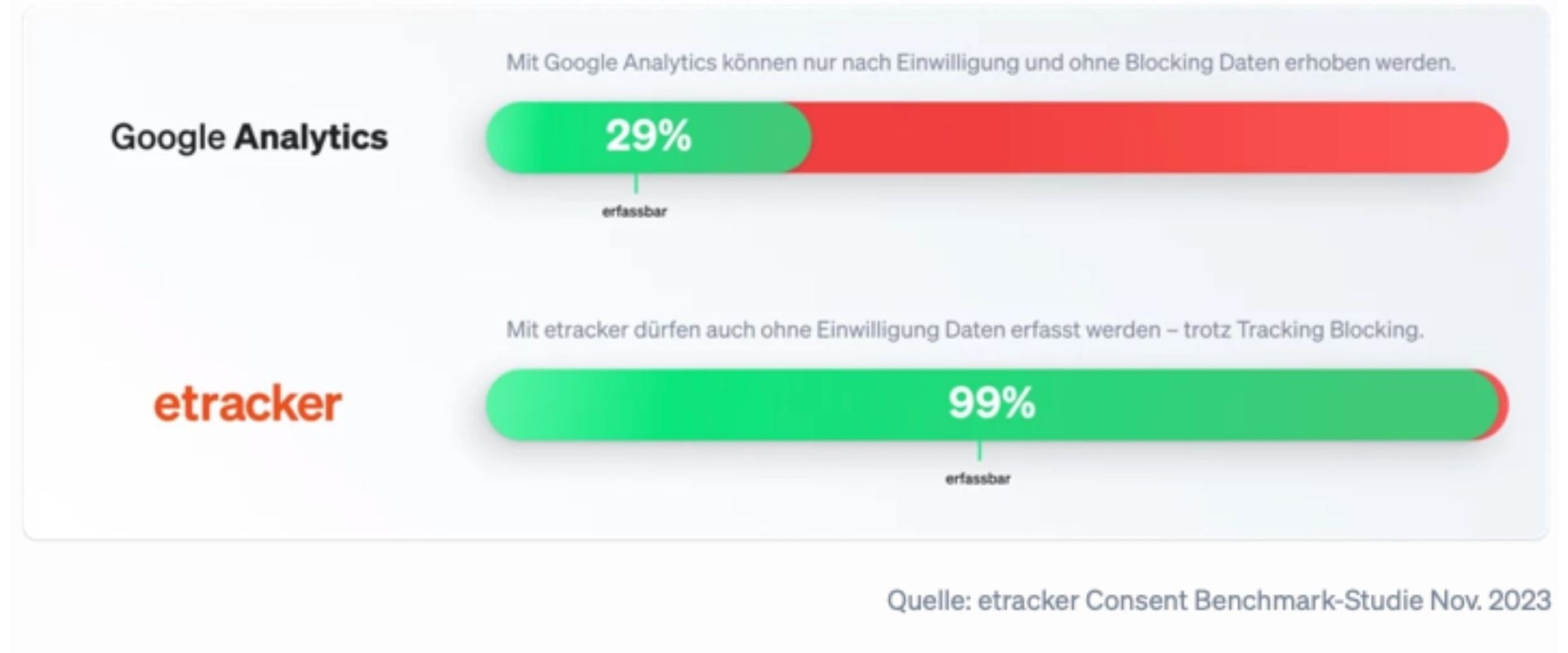
Incomplete Data: The biggest disadvantage of the tool is the incomplete data provided by GA4. Due to GDPR and the requirement for cookie consent, many sessions and conversions are not recorded at all. Users who decline tracking disappear from the statistics. Specifically, this means that up to 70% of actual interactions remain invisible. This is a significant risk for data-driven decisions. If only 3 out of 10 conversions are attributed to the right ads, the result appears worse than it is and makes campaign management a black box.
Lack of Comparability: Due to the new data model, GA4 differs significantly from Universal Analytics. Old metrics such as sessions, bounce rates, or conversion numbers are hardly comparable, which makes long-term analyses and performance comparisons significantly more difficult.
Unclear Attribution: GA4 automatically attributes conversions to various channels without clearly disclosing how this weighting is calculated. This creates uncertainty in budget allocation because marketers do not know exactly which touchpoints were truly responsible for the purchase.
Limited Insights into Product Performance: Shopping data in GA4 is often only available in an aggregated form. Those wanting to find out which products are profitable or where margins are being lost must navigate through cumbersome reports, often without a clear outcome.
If important decisions are made solely based on Google Analytics and incomplete data, the likelihood of missing opportunities or making poor decisions is quite high. Therefore, anyone who truly wants to optimize shopping ads needs a tool that provides data that is complete, transparent, and legally compliant.
The Advantages of etracker Analytics
Where Google Analytics falls short, etracker steps in, as the tool from Germany offers clear advantages over Google Analytics. Online retailers who want to trust their data benefit from the following advantages of etracker:
1. Almost Complete Data Capture, Even Without Cookie Consent
While GA4 loses many sessions as soon as users decline cookies, etracker captures up to 99% of all visits and conversions thanks to its privacy-compliant measurement method.
This means: Your reports finally show the reality, and neither half numbers nor distorted KPIs.
2. 100% GDPR-Compliant and Made in Germany
etracker stores all data exclusively on German servers, without US transfers or legal risks. This creates maximum data security and strengthens your customers' trust.
3. Simple Reports, Clear Insights
Where GA4 often appears complex and technical, etracker relies on clear dashboards and intuitive reports. You can see at a glance:
Which products truly generate revenue,
Which campaigns drive conversions,
Where wastage occurs.
In this way, you can target budgets exactly where they pay off.
4. Flexible Campaign and Conversion Tracking
etracker integrates directly with Google Ads, Meta, Microsoft Ads, and other channels. This means clean conversion data flows back into the advertising systems. This is a real boost for your automated bidding strategies.
5. Data Protection Meets Data Power
The biggest advantage: You get precise, complete data without having to compromise on data protection. This makes etracker the perfect foundation for genuinely measuring, understanding, and optimizing performance.
Learn more about the tracking and analytics tool from etracker!

“With this solution, we ensure a balance between privacy and successful digital marketing.”
Olaf Brandt
CEO @ etracker
CPC Savings and More Visibility: The Advantages of the etracker CSS
In addition to precise tracking, the cost-per-click is also a critical lever for successful shopping ads. This is where eTracker CSS comes into play. With the help of Label Up, etracker has become a CSS partner itself.
The whitelabel CSS system offers you the opportunity to run shopping ads through an independent price comparison site while achieving up to 20% CPC savings compared to Google CSS.
Read how you can become a CSS partner yourself.
In addition to cost savings, Label Up's own CSS also provides:
More visibility with chosen keywords under the shopping ad
Free clicks on the CSS name
Full control with your own Merchant Center and feed setup
Independence from Google and no reliance on internal tools or support
Fast onboarding process with direct contacts for technical implementation
Having your own CSS not only offers cost benefits but also visibility advantages in the Google Shopping world.
Read here how you can become a CSS partner yourself and make the most of the combination of CSS and tracking.
Clean Tracking and Own CSS: An Unbeatable Duo
When tracking and CSS are strategically combined, the Google Shopping strategy truly becomes powerful and fully utilizes its potential.
etracker Analytics provides the foundation: clean, complete, and data protection compliant data, on which sound decisions are based.
etracker CSS simultaneously ensures that every click costs less, increases brand visibility, and budgets are used more efficiently.
This is also demonstrated in practice: agencies or shops that rely on both etracker and Label Up report the same positive effect: they have more complete data and simultaneously get much more out of their budget. Merchants who think of tracking and CSS together gain a clear competitive advantage.
Those who invest in the combination of analytics and CSS are not only investing in better campaigns but also in a sustainable, scalable e-commerce strategy.
About

etracker GmbH, based in Hamburg, is one of the European pioneers in the field of web analysis ('Made in Germany'). Since its founding in 2000, the company has offered a legally compliant, cookie-free, and GDPR-compliant analysis solution specifically designed for privacy-conscious online marketers.

Other topics