Google Shopping Expansion 2026: 15 new countries & your strategic Google CSS advantage
Google is rolling out Shopping Ads in 15 new markets in 2026. Where Google Shopping Ads are available, the Google CSS model can also be used. The Comparison Shopping Serviceis the technical infrastructure that enables the placement of Google Shopping Ads. As a Google CSS partner, the margin from Google Shopping Europe is eliminated, allowing for up to 20% lower CPCs. Those who enter the new markets as first movers secure this significant price advantage with their own CSS from day one.

What does the Google Shopping Expansion mean for E-Commerce?
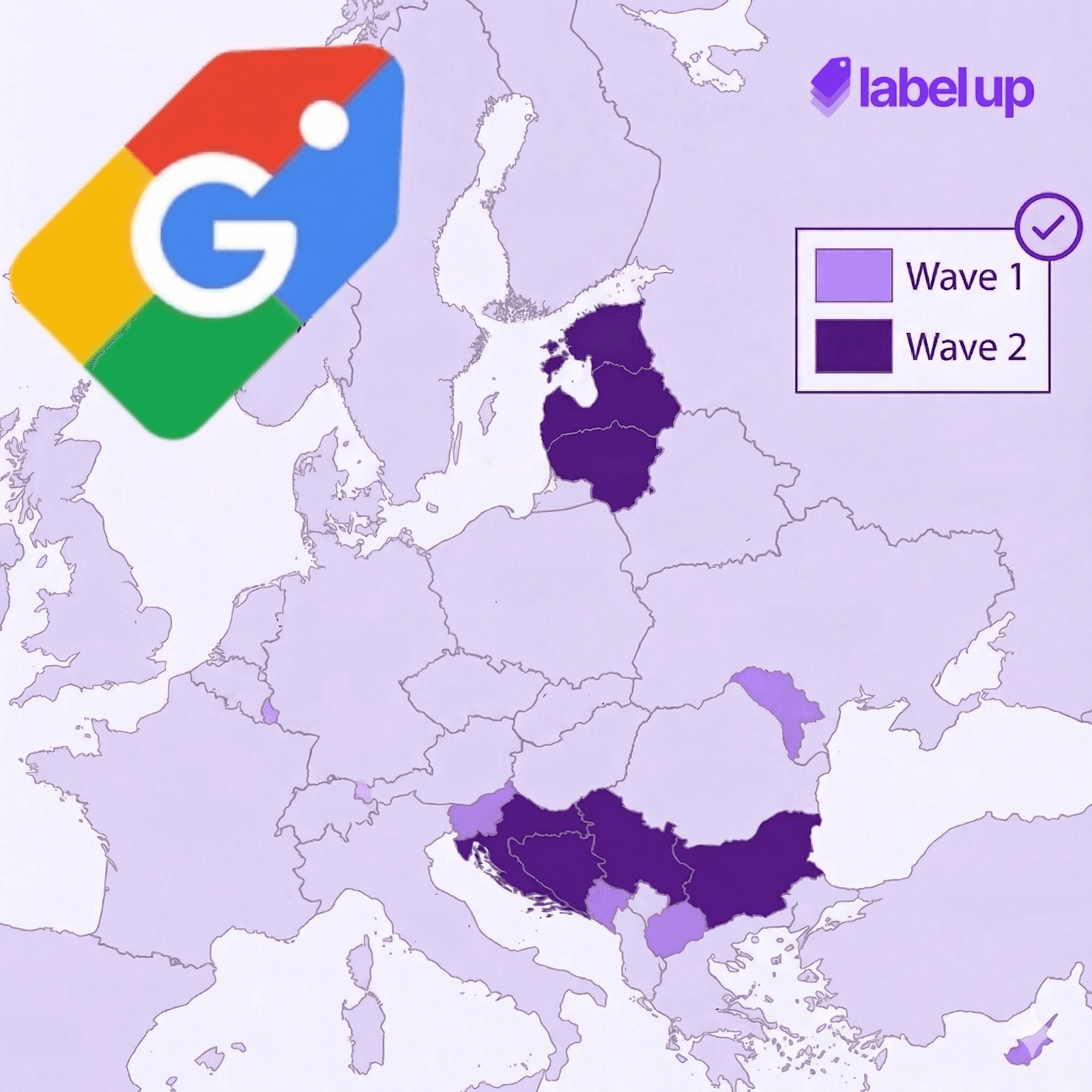
Google's current market expansion primarily focuses on Central and Eastern Europe and opens up access for merchants to millions of new users in a highly visually-oriented commerce environment. To enable strategic scaling, the rollout takes place in two phases:
Bundle 1 (Launch for the "Back to School" season in July): Cyprus, Luxembourg, Moldova, North Macedonia, Malta, and Liechtenstein. Language support for PLA (Product Listing Ads) already exists for these markets.
Bundle 2 (Launch for the "Holiday Season" in November): Bulgaria, Croatia, Lithuania, Slovenia, Serbia, Bosnia and Herzegovina, Montenegro, Estonia, and Latvia.
At the same time, Google is expanding the technical infrastructure with seven new local languages (including Bulgarian, Croatian, Lithuanian, Slovenian, Serbian, Estonian, and Latvian) and enabling full support for the respective national currencies.
The strategic leverage for shops and agencies:
For internationally operating e-commerce companies, a rare window of opportunity arises here. New markets typically mean initially lower auction density and thus lower click prices. Those who directly combine this market environment with the 20% CPC savings of their own Google CSS can scale campaigns under optimal conditions.
Infrastructure Check: Why Shopping Ads and Google CSS are inseparable
A Google CSS (Comparison Shopping Service) is the technical infrastructure through which Google Shopping ads are displayed in Europe. Since the 2017 EUH judgment, Google has been obliged to enable Shopping ads for price comparison sites. This means that anyone wishing to run Shopping ads must do so through a price comparison site (Google CSS).
You can find more about the infrastructure behind Google Shopping Ads and information on the different price comparison sites in this article: Own CSS vs. Google Shopping Europe
By default, most merchants use Google's price comparison site "Google Shopping Europe" (GSE) for this. The crucial disadvantage is that Google retains a margin of about 20% of the click costs in this model to cover its own operating costs of the price comparison.
The same logic applies in the 15 newly opened markets:
No monopoly for Google Shopping Europe: Merchants are not required to pay the 20% margin to Google.
Full CSS compatibility: Since Google is providing the technical infrastructure for Shopping Ads in countries like Bulgaria, Croatia, or Luxembourg, certified CSS partners can also be utilized from day one.
Same auction conditions: A bid through a CSS partner enters the auction without the 20% deduction. So anyone bidding €1.00 competes with the full purchasing power of €1.00 against competitors bidding through Google Shopping Europe (GSE) who effectively only contribute €0.80.
The strategic problem: Many market entrants rely on standard settings in the Merchant Center when launching in new countries. This leads to them unnecessarily paying higher click prices and inefficiently burning their budget while simultaneously trying to gather the first relevant data in a new market.
The solution: By starting with your own keyword CSS or an agency CSS from the beginning, you immediately eliminate the Google margin. You begin in the new regions with significantly higher bidding efficiency. This is particularly crucial in the critical learning phase of PMAX campaigns, as you acquire more traffic for the same budget and the algorithm finds the necessary conversions for optimization more quickly.
Strategic market entry: The first-mover advantage through 20% CPC savings
A first-mover advantage in e-commerce arises when a company leverages technical or strategic innovations in a new market before competitors achieve the same efficiency. In the 15 new Google Shopping countries, this means: Those who start with an optimized CSS setup at the rollout in summer or autumn 2026 (Bundle 1 & 2) set the benchmark for profitability in the entire region.
The problem: "Learning costs" at market entries
When expanding into new countries like Bulgaria, Croatia, or Luxembourg, marketers often face the problem of high initial costs. PMAX campaigns require data to optimize. Since there is no historical conversion data available at the beginning, the click price (CPC) is the decisive lever to generate sufficient traffic for the learning phase with a limited budget. Paying the standard 20% Google margin here artificially limits reach.
The solution: Structural superiority through Whitelabel CSS
By using your own keyword CSS (e.g., through Label Up), you secure two crucial advantages for market entry:
Lower CPA through CPC leverage: Since your bids go into the auction without the 20% deduction, you buy about 25% more clicks at the same budget than competitors using Google's standard CSS. More traffic leads to a faster accumulation of data in PMAX, which shortens the learning phase and stabilizes the Cost-per-Acquisition (CPA) more quickly.
Branding and trust: In new markets, brand trust is essential. A keyword CSS allows you to place your own name (e.g., "From [YourShop] Price Comparison") under your Shopping ads. Users who click on this link reach your own CSS landing page and from there directly to the shop, a click that is completely free for you.
Strategic foresight: Why shops and agencies must act now Instead of relying on "quick fixes," having your own CSS setup in the 15 new markets enables long-term scalability.
For online shops: You keep full control over your margin and branding. You do not start in countries like Romania or Greece as a "beggar" in the auction, but with maximum bidding power and an infrastructure that makes you independent of third parties.
For agencies: Expansion is the ideal window to position yourself as a strategic infrastructure partner. With an agency CSS, you not only offer your clients campaign management, but also provide the technical platform that immediately improves their operational margin by 20%. In an automated PMAX environment, the CSS is one of the few remaining levers for genuine performance sovereignty.
Conclusion: Expansion as a strategic lever for profitable growth
The expansion of Google Shopping to 15 new countries in the EMEA region is more than just a reach update for online shops and agencies. It is a rare opportunity to launch in unsaturated markets with a structural cost advantage.
The facts are clear: Those who advertise through Google Shopping Europe (GSE) in markets like Bulgaria, Croatia, or Luxembourg give away 20% of their budget to Google from the first click. A strategic market entry, however, requires maximum efficiency, especially in the data-intensive learning phase of Performance Max campaigns.
Our recommendation: Do not wait until the competition drives up auction prices in the new regions. Use the rollout of Bundles 1 and 2 in 2026 to launch directly with your own keyword CSS or an agency CSS. This not only secures you the 20% CPC advantage but also creates sustainable independence from third-party providers through free additional clicks and individual branding.
Those who combine the expansion of Google Shopping with the efficiency of Label Up turn a new market into a scalable source of revenue instead of an uncertain cost trap.
FAQs on Google Shopping Expansion 2026: CSS in 15 new markets
Is the 20% CPC advantage through Whitelabel CSS valid in all new Google Shopping countries?
Yes. As Google provides the shopping infrastructure in the 15 new countries (including Cyprus, Bulgaria, Croatia, and Estonia) based on the same model as in the rest of the EEA, the margin of about 20% is also waived here when you use a certified CSS partner. Your bids therefore immediately have a higher purchasing power in the auction.
When does the Google Shopping rollout start in the respective countries?
Google has divided the expansion into two phases:
Bundle 1 (Back to School Season 2026): Cyprus, Luxembourg, Moldova, North Macedonia, Malta, and Liechtenstein.
Bundle 2 (Holiday Season 2026): Bulgaria, Croatia, Lithuania, Slovenia, Serbia, Bosnia and Herzegovina, Montenegro, Estonia, and Latvia.
What technical requirements must be met for the new countries?
You need a product-specific feed for the respective country in the Google Merchant Center. Google supports the expansion with seven new languages (including Bulgarian, Croatian, Estonian) and the respective national currencies. The use of a CSS partner like Label Up can be directly configured in the Merchant Center to activate the cost advantage.
What is the advantage of a Keyword/ Whitelabel Google CSS over the standard CSS from Google Shopping Europe?
A Keyword CSS allows you to place your own keyword (e.g., your brand name or a technical term) under the ad instead of a generic third-party name. When a user clicks on this keyword, they reach your own price comparison page. This click is completely free for you and directs the user straight to your shop – a valuable channel for free traffic in new markets.
Can I use my own Google CSS for all 15 new countries at the same time?
Yes, as a certified CSS partner, you can operate in all supported markets in the EMEA region. With Label Up, you can scale your setup so that you benefit from CPC savings centrally in all new countries without having to set up a separate system for each country.
About

Label Up is a tech provider from Vienna that helps agencies and shops achieve better results with its own Google Shopping CSS and smart label-based optimization.

Other topics