What does the 20% CPC savings mean in the Google CSS program?
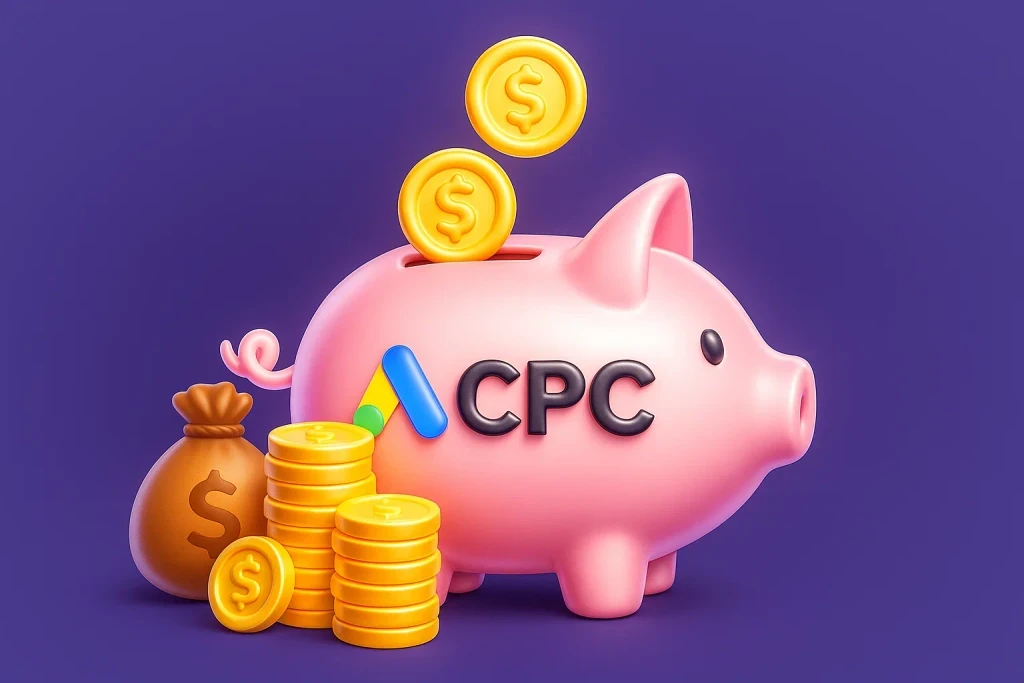
A custom Google CSS reduces click costs in Google Shopping by up to 20%. Instead of an internal Google margin, your entire bid goes into the auction. This leads to greater reach, better placements, and more efficient budgets. Label Up shows how you can strategically leverage this advantage.

The European Commission required Google to operate Google Shopping profitably and independently in the countries of the European Economic Area (EEA) where Shopping Ads are available. To ensure this profitability, Google deducts a fixed margin from each merchant bid before it enters the auction. This margin is taken into account in the CPC (cost per click) that the merchant pays and only applies when a user actually clicks on an ad.
By using their own CSS, agencies can participate in the CSS program themselves. This also allows advertisers to avoid the margin, so that the entire bid flows into the bidding system and they can bid up to 20% more effectively in the auction.
What exactly does the cost savings from click charges through an alternative CSS at Google Shopping achieve?
It is important to mention that this is always a savings of UP TO 20%. Simply put, it is about campaigns linked to a CSS participating in Google's ad auctions with higher virtual bids for the best spots in search results. In contrast to regular Google Shopping campaigns, with a CSS partner, the entire bid of the customer flows into the auction. However, in normal Google Shopping campaigns, a Google internal margin applies, so it is reported that about 80% of the bid actually flows into the auction process.
An own CSS avoids this and gives agencies and advertisers a better starting position to improve their placements and impressions in the fiercely competitive Google Shopping market. For e-commerce companies relying on Google Shopping campaigns, this is a crucial advantage – especially with high CPC costs and competitive pressure.
It is important when using a CSS that a €1,000 advertising budget does not automatically become €800. Instead, the value of the bid changes through a CSS provider in the auction. Thanks to the virtually higher bid, the shop can participate in more auctions, including more expensive, potentially promising auctions. This typically leads to higher visibility and more impressions, thereby increasing the effectiveness of the ads.
What does the savings in Google Ads depend on through a CSS partner?
Market and Competitive Conditions: In highly competitive markets, the effect of the savings can vary. The higher the number of merchants already using a CSS, the lesser the positive impact in the bidding process. This also underscores the relevance of implementing a CSS early, as companies would otherwise start at a significant competitive disadvantage and must initially make substantial efforts to catch up on the resulting deficit.
Type of Campaign: Performance Max campaigns that include various networks can also benefit from the savings to varying degrees.
CSS Provider: Both the fee for integration into the CSS and the landing page and product density have a significant impact on success. For example, if many shops from similar industries are listed, the end customer may not find the desired product or shop on the CSS landing page.
Conclusion
The cost advantage of click prices through the use of one's own CSS is a valuable tool for agencies and e-commerce providers to enhance their competitive advantage in Google Shopping. Although actual results can vary, participation in the CSS program remains essential. Particularly, the high density of shops using a CSS (around 40% of the overall market) should serve as an additional impetus for those hesitant – as almost every second competitor is currently benefiting from this strategic competitive advantage. Label Up supports agencies and shops in participating in the CSS program themselves and thus benefiting from the advantages of their own CSS.
About

Label Up is a tech provider from Vienna that helps agencies and shops achieve better results with its own Google Shopping CSS and smart label-based optimization.

Other topics