Google Shopping in Croatia: The Strategic Guide for Market Launch 2026
E-commerce in Croatia is on the verge of transformation: Google is officially rolling out Shopping Ads in 15 new EMEA markets in 2026. The launch for the Croatian market is scheduled for Q4 2026. This provides businesses with the opportunity to place products as Google Shopping Ads just in time for the Christmas season of 2026. To successfully leverage this launch as a first mover, a strategic shift from traditional text ads to a product data-driven strategy is necessary.

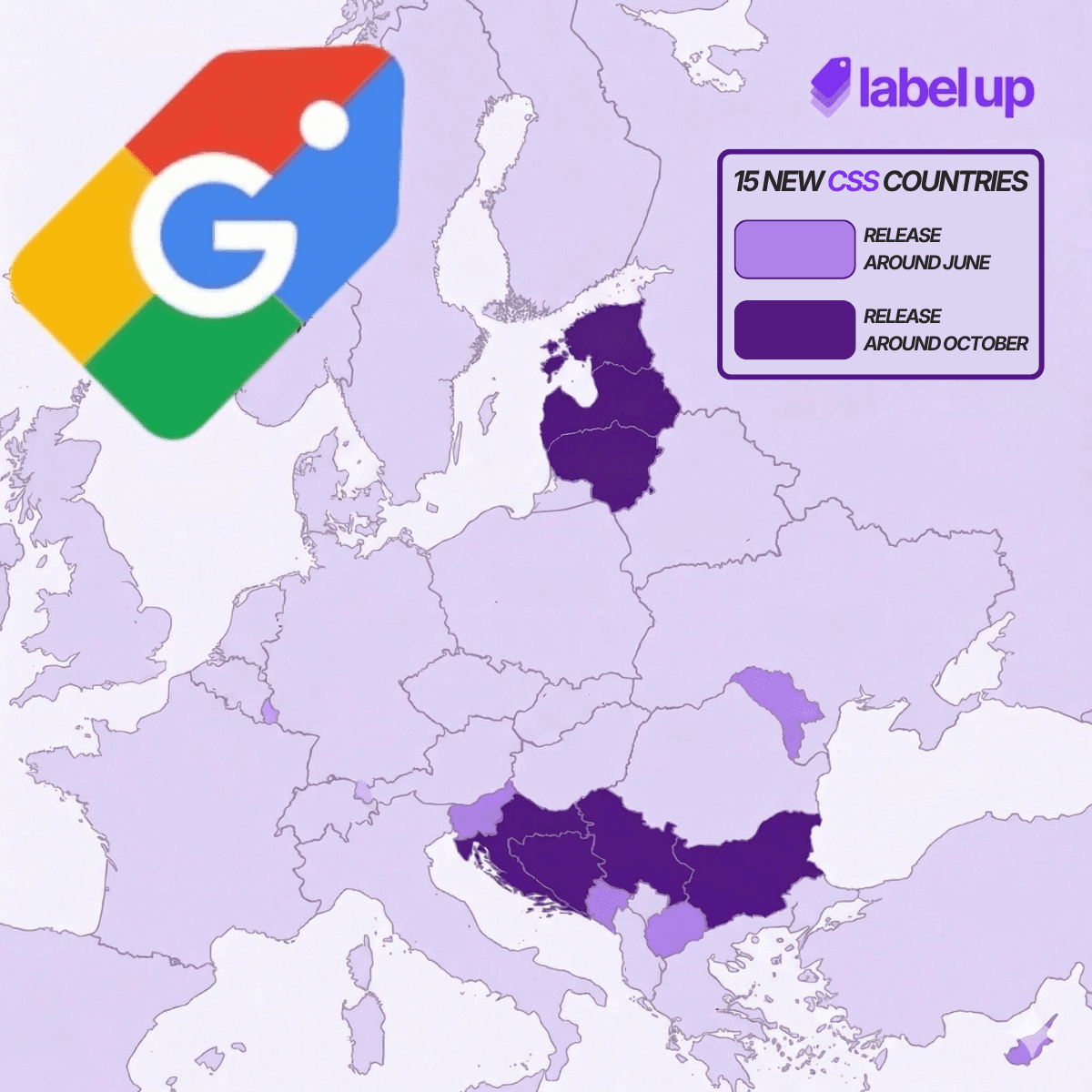
The EMEA Expansion: 15 New Markets in Focus
The rollout in Croatia is part of a massive infrastructure expansion by Google in the EMEA region (Europe, Middle East, Africa). A total of 15 countries will be opened up in different waves (so-called bundles). This timeframe offers brands and agencies a rare opportunity to enter markets where auction density at the outset is extremely low.
The 15 new markets include:
Southeast Europe: Croatia, Serbia, Slovenia, and Bulgaria.
Mediterranean Region: Malta and Cyprus.
Baltics: Lithuania, Latvia, and Estonia.
This large-scale rollout means for operational planning: those who master the technical infrastructure for one of these markets can efficiently scale the model to the remaining countries. This enables geographical diversification of the advertising budget away from highly competitive markets towards growth markets with significantly lower Cost-per-Click (CPC) rates.
Technical Basics for the Rollout in Croatia
Google Shopping Ads signify the transition from keyword-based to product data-based advertising strategy. Instead of placing bids on individual search terms, Google will be provided with a detailed product feed. When a user searches for an item in Zagreb or Split, the algorithm generates a product card with an image, price, and brand name.
To be ready on the first day of the rollout in Croatia, the following pillars must be optimized:
Localization of Currency and Language
Since Croatia's full integration into the Eurozone, the primary currency for the feed is the Euro (EUR). This massively simplifies pricing for international retailers. Google will also fully support the Croatian language. This means that product titles, descriptions, and attributes must be professionally localized. Simple AI translation is often not sufficient to ensure relevance in the local algorithm. Users search for specific terms - those who do not represent these in the feed lose visibility.
The Quality of the Feed in Merchant Center Next
Success in the "visual era" of Google Shopping almost exclusively depends on data quality. The Google Merchant Center requires a feed in which images are high-resolution and product attributes such as EAN (GTIN), brand, and material are precisely mapped. The more detailed the data, the better the algorithm can match the ad to suitable search queries. Especially in a new market like Croatia, trust is gained fastest through a professional and error-free product presentation.
Strategic Market Positioning: Niche Mastery
The Croatian e-commerce market has so far been strongly dominated by large regional platforms. Google Shopping Ads serve as a strategic lever for what is known as "Niche Mastery." Through prominent placement at the top of search results, specialized retailers can position themselves directly next to or even above international giants.
Croatian consumers are considered above-average mobile-savvy. Shopping Ads are optimized for mobile use and ideally serve the need for quick information (image, price, brand). By cleverly segmenting products, the budget can be directed specifically towards margin winners, instead of losing it in a broad catalog.
The CSS Infrastructure as an Efficiency Lever
After preparing the feed, the choice of technical infrastructure follows. Due to regulatory requirements in the European Economic Area (EEA), all Shopping Ads must be displayed through a Comparison Shopping Service (CSS). For the start in Croatia, two paths are available:
Google Shopping Europe (The Standard Solution)
Many retailers start by default through Google's CSS service. This path is straightforward but includes an internal margin of about 20% on each bid. This means: From a bid of €1.00, only €0.80 effectively goes to the auction. In a new market, this can already make the difference between profitability and loss.
Your Own Keyword CSS (The Strategic Solution)
Professional retailers and agencies often rely on their own CSS. A Keyword CSS eliminates the 20% margin, allowing the full bid to go into the auction. This creates an immediate competitive advantage over retailers using the standard path.
Additionally, the Keyword CSS provides a massive branding advantage: among the ads in Croatia, there will not be a generic "From Google," but rather the retailer's brand name or a freely chosen keyword. This increases the click-through rate (CTR), builds trust, and allows for free clicks on the price comparison site.
Operational Guide: In Three Steps to Live Launch in Croatia
To be visible as one of the first players at the planned launch date in Q4 2026, a structured operational preparation is necessary. The following process ensures that all technical prerequisites for the Croatian market are met:
1. Setting Up the Merchant Center
Firstly, a dedicated Google Merchant Center for Croatia must be created. Here, country-specific settings for shipping costs and return conditions must be defined. Since Croatia is part of the Euro area, complex conversions are eliminated, but tax and shipping rules must precisely comply with local legal requirements. A correctly configured Merchant Center forms the foundation for the acceptance of the feed by the Google bot.
2. Feed Preparation and Localization
In the second step, the export of product data into the Croatian feed takes place.
Language Adjustment: All product-relevant texts (titles, descriptions) must be in Croatian.
Attribute Mapping: Important attributes such as color, size, and material should be localized to enhance filterability in Google search results. The use of supplemental feeds is recommended to make specific optimizations for the Croatian market without altering the global main feed.
3. Connection to a CSS Partner
The final step is linking the Merchant Center with a Comparison Shopping Service. Only through this connection will the display of Shopping Ads in the Croatian search network be enabled. It is advisable to choose a solution that does not retain bidding margins and supports one's own branding. If the appropriate technical infrastructure is needed to implement these steps, Label Up offers the optimal solution for an efficient market launch with its own Keyword CSS. This ensures that 100% of the budget flows into the auction and the brand is prominently placed under each ad.
Conclusion: Securing the First-Mover Advantage
The official launch of Google Shopping in Croatia at the end of 2026 marks a fundamental shift in market shares. Those who invest early in data quality and a professional CSS structure will shape the new era of e-commerce in Southeast Europe. Speed combined with technical precision is the winning formula here. Companies that take advantage of this "gold rush window" build an account authority that is increasingly difficult to achieve in saturated markets.
FAQs about the Google Shopping Launch in Croatia
When exactly will Shopping Ads be available in Croatia?
Croatia is part of the "Bundle 2" of the EMEA expansion. The launch is planned for the fourth quarter (Q4) of 2026, just in time for the start of the Christmas shopping season.
What specific requirements are there for the Croatian feed?
The feed must support the Croatian language. Since Croatia is part of the Eurozone, all prices must be provided in Euro (EUR).
Why is the choice of CSS partner crucial for success?
In the EMEA region, using a CSS is mandatory. While standard solutions often retain a 20% margin, specialized solutions like those from Label Up allow for full use of the budget and strengthen branding under the ad through individual keywords.
Is a local subsidiary in Croatia necessary?
No. International retailers can serve the Croatian market as long as the feed is localized, the delivery conditions for the destination country are clearly defined, and delivery to local addresses is possible.
About

Label Up is a tech provider from Vienna that helps agencies and shops achieve better results with its own Google Shopping CSS and smart label-based optimization.

Other topics